Introduction
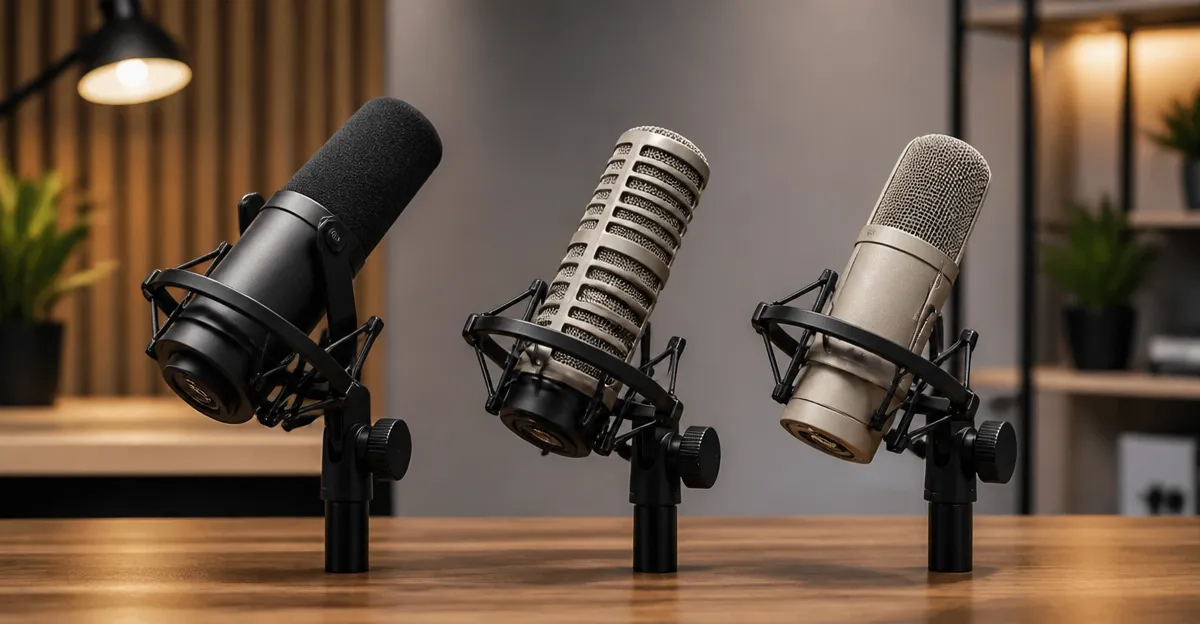
This guide explains how to select the most suitable shock mount for three popular broadcast microphones: the Shure SM7B, the Electro‑Voice RE20, and the Rode Procaster. Readers will learn the technical criteria that affect isolation, the compatibility ranges of common mounts, and practical recommendations based on real‑world user feedback. By the end of the article, one will be able to make an informed purchase decision that balances price, durability, and performance.
Background and Context
Shock mounts are mechanical devices that suspend a microphone using elastic elements, thereby preventing vibrations from reaching the capsule. They are essential in studio environments where desk rattles, floor buzz, and handling noise can degrade recorded audio. The three microphones highlighted in this guide differ in size, weight, and mounting thread, which directly influences the choice of mount.
The Shure SM7B weighs approximately 765 g and uses a 5/8‑inch (15.9 mm) threaded mount. The Electro‑Voice RE20 is a large‑diaphragm dynamic mic weighing around 900 g with a similar 5/8‑inch thread. The Rode Procaster, a broadcast‑grade dynamic mic, also employs a 5/8‑inch thread but is slightly lighter at 730 g. All three require a mount that can support substantial mass while isolating low‑frequency rumble.
Understanding the diameter of the microphone body is equally important. The SM7B and RE20 have a body diameter near 30 mm, whereas the Procaster measures roughly 30‑32 mm. Consequently, shock mounts designed for 28‑32 mm microphones are the most appropriate starting point.
Understanding Shock Mount Compatibility
Compatibility is determined by three primary factors: mounting thread size, microphone body diameter, and the mount’s load capacity. A mount that accepts a 5/8‑inch thread but is engineered for a lighter condenser will likely sag under the weight of a dynamic broadcast mic, resulting in reduced isolation.
Load capacity is usually expressed in pounds or kilograms. A mount rated for 2 lb (0.9 kg) will struggle with the SM7B, which approaches 1.7 lb. Therefore, selecting a mount with a load rating of at least 3 lb (1.4 kg) provides a safety margin.
Material construction also matters. Heavy‑duty metal frames combined with robust rubber or elastic bands deliver long‑term stability. Aluminum alloy offers a balance of rigidity and weight, while solid steel provides maximum durability at a higher cost.
Recommended Shock Mounts
1. Boseen Mic Shock Mount (28‑32mm)
The Boseen Mic Shock Mount (28‑32mm) is engineered for dynamic microphones such as the SM7B, SM58, and ATR2100‑USB. It features heavy‑duty solid metal construction, strong rubber bands, and an angle‑adjustable locking knob. The mount includes a 5/8‑to‑3/8‑inch screw adapter, enabling direct attachment to most boom arms.
- Price: $9.99
- Rating: 4.5/5 (534 reviews)
- Key benefits: anti‑vibration design, compatible with 28‑32 mm diameters, budget‑friendly.
Customer feedback highlights reliable isolation of desk vibrations and a solid metal feel that suggests longevity. Users note that while the mount does not eliminate motor noise from hard‑drive spindles, it excels at reducing typing and impact sounds.
2. Boseen Shock Mount (43‑47mm)
The Boseen Shock Mount (43‑47mm) targets larger condenser microphones such as the Blue Spark, MXL V63, and CAD U37. Its aluminum alloy frame and elastic rope bands provide a sturdy yet flexible suspension.
- Price: $12.95
- Rating: 4.5/5 (324 reviews)
- Key benefits: suitable for 43‑47 mm diameters, aluminum construction, includes sturdy support tendons.
Although not intended for the SM7B or RE20, this mount demonstrates the importance of matching diameter ranges. Users commend its durability in studio booths and recommend a larger adjustment screw for easier tightening.
3. Boseen Universal Condenser Mic Shock Mount
The Boseen Universal Condenser Mic Shock Mount offers four interchangeable bottom screws, making it compatible with a wide array of microphones, including the AT2020, Rode NT1‑A, and Neumann U87. Its all‑metal construction ensures rigidity, while the elastic band and padding protect the mic.
- Price: $29.99
- Rating: 4.4/5 (1,818 reviews)
- Key benefits: multi‑size compatibility, heavy‑duty metal, angle‑adjustable locking knob.
Reviewers appreciate the premium feel and the inclusion of multiple mounting adapters. The mount is not suitable for handheld dynamics such as the SM7B, but it serves as a benchmark for high‑quality condenser mounts.
4. ZRAMO Universal Shock Mount (48‑51mm)
The ZRAMO Universal Shock Mount (48‑51mm) is designed for large‑diameter studio condensers like the AT2020 and AT2500. It includes two adapter screws (gold and black) and a felt/foam insert for added protection.
- Price: $10.90
- Rating: 4.4/5 (1,095 reviews)
- Key benefits: metal construction, fits 48‑51 mm microphones, includes dual adapters.
Customers report excellent vibration reduction for the Electro‑Voice RE20, noting that the mount resolves hum and handling noise without breaking the bank.
5. AA Audio Heavy Duty Mic Boom Arm
The AA Audio Heavy Duty Mic Boom Arm complements shock mounts by providing a stable platform capable of supporting heavy dynamic microphones up to 6.6 lb (3 kg). Its gear‑lock mechanism prevents sagging, and the arm includes 3/8‑inch to 5/8‑inch adapters for universal compatibility.
- Price: $49.99
- Rating: 4.4/5 (447 reviews)
- Key benefits: high load capacity, gear‑lock stability, extensive cable management.
Reviewers emphasize the arm’s rigidity when paired with the SM7B, noting that the combination eliminates the need for additional reinforcement.
Comparison and Selection Guide
The table below summarizes the essential attributes for each mount, allowing readers to compare them side by side.
| Mount | Diameter Range | Thread Compatibility | Load Capacity | Material | Price | Rating |
|---|---|---|---|---|---|---|
| Boseen Mic Shock Mount (28‑32mm) | 28‑32 mm | 5/8‑inch (incl. 3/8 adapter) | ~3 lb | Solid metal + rubber | $9.99 | 4.5 |
| Boseen Shock Mount (43‑47mm) | 43‑47 mm | 5/8‑inch | ~2 lb | Aluminum alloy | $12.95 | 4.5 |
| Boseen Universal Condenser | 20‑47 mm (via adapters) | Varies (4 screws) | ~4 lb | Heavy‑duty metal | $29.99 | 4.4 |
| ZRAMO Universal (48‑51mm) | 48‑51 mm | 5/8‑inch (dual adapters) | ~3 lb | Metal | $10.90 | 4.4 |
| AA Audio Heavy Duty Boom Arm | N/A (arm) | 5/8‑inch | 6.6 lb | Aluminum alloy + nylon | $49.99 | 4.4 |
For the Shure SM7B and Electro‑Voice RE20, the Boseen Mic Shock Mount (28‑32 mm) paired with the AA Audio Boom Arm offers the most cost‑effective solution while meeting load requirements. The ZRAMO mount provides a comparable alternative for users who prefer a larger diameter design, though an additional adapter may be required.
Best Practices & Tips
- Verify microphone diameter before purchase; mismatched sizes lead to poor isolation.
- Use the supplied 5/8‑to‑3/8 adapter when attaching a mount to a boom arm that only accepts 3/8 threads.
- Position the mount so that the elastic bands are evenly tensioned; uneven tension can introduce resonance.
- Combine a high‑load boom arm with a mount that has a similar or higher weight rating to prevent sagging over time.
- Periodically inspect rubber bands for wear; replace them if they become brittle to maintain optimal vibration damping.
Frequently Asked Questions
What thread size do the SM7B, RE20 and Procaster share?
All three microphones use a standard 5/8‑inch (15.9 mm) threaded mount, which is compatible with most professional shock mounts and boom arms.
Can I use a condenser‑mic‑specific mount with a dynamic mic?
It is possible if the diameter range and load capacity align, but many condenser‑oriented mounts are optimized for lighter weights and may sag under the mass of a dynamic broadcast mic.
Do I need a separate adapter for a 3/8‑inch boom arm?
Yes. Most shock mounts include a 5/8‑to‑3/8 adapter; ensure the adapter is present before installation.
How often should I replace the rubber or elastic bands?
Rubber bands typically retain their elasticity for 12‑18 months under normal studio conditions. Replace them when they show visible cracks or loss of tension.
Is a metal shock mount always better than an aluminum one?
Metal (steel) mounts provide greater rigidity and can support heavier microphones, while aluminum offers lighter weight and sufficient strength for most condenser applications. Choose based on the weight of your microphone and budget.
Conclusion
Selecting the right shock mount involves matching microphone diameter, thread size, and weight to the mount’s specifications. For Shure SM7B, Electro‑Voice RE20, and Rode Procaster, the Boseen Mic Shock Mount (28‑32 mm) combined with the AA Audio Heavy Duty Mic Boom Arm delivers reliable isolation at an affordable price. Users seeking a larger‑diameter solution may consider the ZRAMO Universal Shock Mount, while the Boseen Universal Condenser Mount serves as a premium option for multi‑mic studios.
Products Featured in This Guide
Boseen Mic Shock Mount (28‑32mm)
Price: $9.99 | Rating: 4.5/5 (534 reviews)
Featured for its compatibility with dynamic broadcast microphones, solid metal construction, and budget‑friendly price.
Boseen Shock Mount (43‑47mm)
Price: $12.95 | Rating: 4.5/5 (324 reviews)
Featured for its aluminum alloy build and suitability for larger condenser microphones.
Boseen Universal Condenser Mic Shock Mount
Price: $29.99 | Rating: 4.4/5 (1,818 reviews)
Featured for its multi‑size compatibility, heavy‑duty metal construction, and professional‑grade performance.
ZRAMO Universal Shock Mount (48‑51mm)
Price: $10.90 | Rating: 4.4/5 (1,095 reviews)
Featured for its ability to dampen vibration in large‑diameter microphones such as the RE20 at a low cost.
AA Audio Heavy Duty Mic Boom Arm
Price: $49.99 | Rating: 4.4/5 (447 reviews)
Featured for its high load capacity, gear‑lock stability, and compatibility with the recommended shock mounts.